
Ultimate Guide
The Award Traveler's Guide to Marriott Bonvoy
Marriott Bonvoy is the largest hotel program on earth, with more than 30 brands and roughly 9,000 properties. The points are weak on a per-point basis, around 0.8 cents, but the footprint means you can almost always use them, and the fifth night free benefit quietly restores much of the value dynamic pricing took away.
How to earn Marriott Bonvoy points
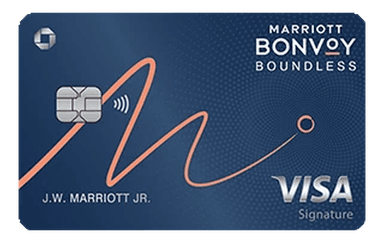
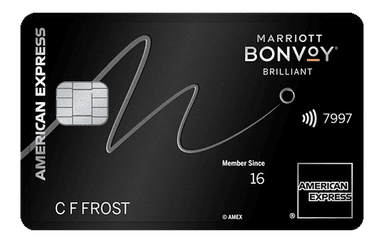
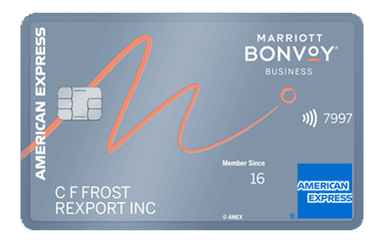
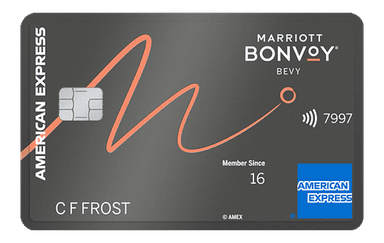
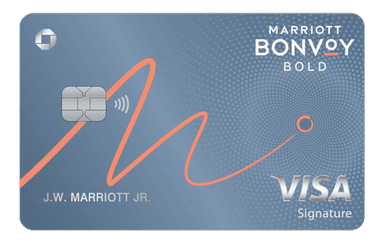
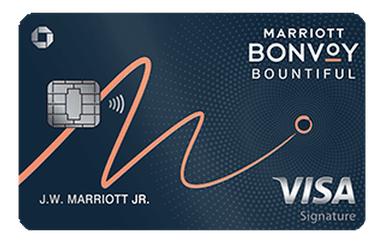
Bonvoy is unusual in having cobrand cards at two issuers. Chase carries the Bonvoy Boundless ($95), the no-fee Bonvoy Bold, and the small business card lineage, while Amex carries the Bonvoy Bevy, the Bonvoy Business ($125), and the premium Bonvoy Brilliant ($650). The Brilliant is the flagship: it grants automatic Platinum Elite status, an annual 85,000-point free night award, and dining credits that offset most of the fee for regular users.
Bank transfers reach Bonvoy from Chase, Amex, and Bilt at 1:1. Almost never do this. A point worth 2 cents should not become a point worth 0.8 cents. The exception is a small top-off to finish a booking you could not otherwise complete.
Stays earn 10 base points per dollar at most brands, with elite bonuses from 10 percent at Silver to 75 percent at Titanium and Ambassador. Marriott also pushes points through its dining program, timeshare previews, and frequent promotions, which is why heavy Marriott loyalists accumulate large balances almost by accident.
- ▸Cobrand cards at Chase and Amex; Brilliant ($650) includes Platinum status
- ▸Transfers in from Chase, Amex, and Bilt at 1:1, best avoided except for top-offs
- ▸Stays earn 10x base at most brands plus elite bonuses
Dynamic pricing: no chart, no caps
Marriott dropped its award chart in 2022. Award prices now float with cash rates, with no published ceiling at any property. A night that cost 85,000 points under the old chart can demand 150,000 or more during compression. The practical effect is that Bonvoy points behave like a rebate currency pegged loosely to cash prices rather than a tool for outsized wins.
That said, the peg is loose, and the looseness is your opportunity. Award prices update on a lag and do not always track rate spikes, so during city-wide events or holiday weeks you will sometimes find award pricing far below what cash demands. The reverse also happens, so never redeem without checking the cash rate.
A useful mental benchmark: divide the cash rate after taxes by the points price. Above 0.8 cents per point, redeem. Below 0.7, pay cash and bank the 10x earning instead.
How to redeem well: the fifth night free
Every award stay of five nights or more prices the cheapest night of each five at zero points. This is the single most important rule in the program. A five-night redemption is automatically a 20 percent discount, which lifts a 0.8 cent currency to an effective 1.0 cent and turns marginal redemptions into good ones.
Structure trips around it. Two five-night blocks beat one ten-night booking at a single property only if prices differ, so compare both. If your trip is four nights, check whether adding a fifth night costs literally nothing, because when the fifth night is the cheapest of the set, it often does.
Beyond the fifth night, focus redemptions where Marriott's footprint is unique: Ritz-Carlton and St. Regis resorts in places with no Hyatt competition, safari-adjacent properties, and big-city luxury during compression when cash rates outrun award rates.
Elite status: what the tiers actually deliver
Silver (10 nights) and Gold (25 nights) are nearly cosmetic. Gold's headline benefit is 2 p.m. late checkout and a 25 percent point bonus. Free breakfast does not appear until Platinum, which is the first tier that changes your stay.
Platinum Elite (50 nights) brings lounge access and breakfast at most brands, suite upgrades subject to availability, guaranteed 4 p.m. late checkout, and an annual choice benefit including five Suite Night Awards. Titanium (75 nights) improves upgrade priority. Ambassador (100 nights plus $23,000 of annual spend) adds a dedicated service contact and flexible check-in windows where available.
The shortcut matters more than the climb. The Bonvoy Brilliant card grants Platinum outright for $650 a year, and every Bonvoy cobrand card deposits 15 elite night credits annually. For most travelers, buying Platinum through the Brilliant beats grinding 50 nights.
Free night certificates from cards
Most Bonvoy cards issue an annual free night award: 35,000 points on the Boundless and Bonvoy Business, 50,000 on the Bevy, and 85,000 on the Brilliant. Since 2021 you can top up any certificate with up to 15,000 points from your balance, so a 35,000 cert reaches hotels pricing up to 50,000 and the Brilliant cert reaches 100,000.
Dynamic pricing made certificates harder to use, because a hotel that averages 35,000 points may price at 42,000 on the dates you want. The top-up provision is the fix. Always search with the top-up in mind, and burn certificates at the most expensive hotel the combined ceiling allows.
Certificates expire one year from issuance with no extensions in normal course. An expired 85,000-point certificate is several hundred dollars of value gone, so set a reminder the day it posts.
Our strategy
Run Bonvoy as a closed loop. Earn through stays and a cobrand card, redeem in five-night blocks, and never feed it from transferable currencies except to top off. The program rewards volume and punishes hoarding, because dynamic prices drift upward with cash rates while your points sit still.
If you stay 30 or more nights a year at Marriott brands, the Brilliant card is the centerpiece: Platinum status, the 85,000-point certificate, and 15 elite nights toward Titanium. If you stay fewer than 10 nights a year, hold the Boundless for the 35,000 certificate and treat the points as a side effect.
Value check everything. Bonvoy's size means there is always an award to book, but not always one worth booking. The cash rate is your scoreboard.
Sweet Spots
Fifth night free on every five-night award
The cheapest night in each block of five prices at zero. On a 200,000-point luxury stay this returns 40,000 points, and it stacks across ten-night bookings. It is the only structural discount left in the program and the backbone of every good Bonvoy redemption.
Brilliant 85,000-point certificate with a 15,000 top-up
The annual award from the $650 Brilliant card reaches hotels pricing up to 100,000 points, which includes St. Regis and Ritz-Carlton properties charging $800 or more a night. Used well, the certificate alone outweighs the annual fee.
Off-peak luxury in Asia and the Middle East
Award pricing at properties like the St. Regis Bangkok or JW Marriotts across Southeast Asia often sits in the 25,000 to 45,000 range while delivering service that would cost double in the US or Europe. Per-point returns routinely clear 1 cent.
Compression-date arbitrage in big cities
Award prices lag cash spikes. During marathons, conferences, and holiday weeks, a room selling for $700 cash sometimes still books for 50,000 to 60,000 points. Check awards first whenever cash rates look absurd.
Homes & Villas and unique-footprint resorts
Marriott's reach into safari lodges, overwater resorts, and vacation rentals covers places no other program touches. When the alternative is a four-figure cash rate with no Hyatt or Hilton option, even 0.8 cent points are the cheapest way in.
Frequently Asked Questions
▸Do Marriott Bonvoy points expire?
Points expire after 24 months with no qualifying activity. Earning or redeeming any amount resets the clock. A single cobrand card purchase or a small dining program credit is enough.
▸Can I transfer or pool points with family?
Yes. Marriott allows free point transfers between member accounts, generally up to 100,000 points sent per year, and you can book award stays in another person's name from your own account.
▸Can I top off a free night certificate with points?
Yes, up to 15,000 points on top of the certificate's face value. A 35,000-point certificate can book a 50,000-point night and an 85,000-point certificate can reach 100,000.
▸Is it worth transferring Chase or Amex points to Bonvoy?
Almost never. You are converting a roughly 2 cent currency into a 0.8 cent one. The exception is topping off a balance to complete a specific high-value booking, especially a five-night block.
▸Does the fifth night free work with certificates?
No. The benefit applies to nights paid with points. A stay built from certificates plus points only counts the points nights toward the five-night calculation, so structure long stays as pure points bookings when possible.
▸Should I buy Bonvoy points?
Only during a targeted sale and only with an immediate redemption in hand that beats the purchase price. Buying speculatively into a dynamically priced program with no caps is how balances die.
Guide last updated 2026-06-09.