
Amex Gold vs Capital One Savor
By Alex Compton · Updated
The Amex Gold and Capital One Savor both chase the same spending, restaurants and groceries, from opposite ends of the fee spectrum. The Gold charges $325 and pays 4x in transferable points. The Savor charges nothing and pays 3% cash. The gap between them is smaller than the fee difference suggests, and for some setups the free card wins outright.

American Express Gold Card
American Express
- Our rating
- 8.8/10
- Welcome bonus
- 100,000 points
- Bonus value
- ≈$2,000
- Annual fee
- $325
- Credits, max/yr
- $424
- Foreign txn fee
- None
Top earning rates
- 4x Restaurants worldwide (up to $50k/yr)
- 4x US supermarkets (up to $25k/yr)
- 5x Prepaid hotels through Amex Travel
- 3x Flights booked direct or via Amex Travel
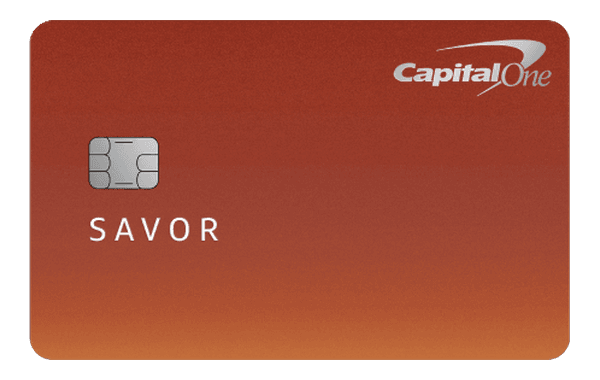
Capital One Savor
Capital One
- Our rating
- 8.5/10
- Welcome bonus
- $200 cash
- Bonus value
- ≈$200
- Annual fee
- $0
- Credits, max/yr
- $0
- Foreign txn fee
- None
Top earning rates
- 8x Capital One Entertainment purchases
- 5x Hotels, vacation rentals & rental cars via Capital One Travel
- 3x Dining, groceries, entertainment & popular streaming
- 1x All other purchases
Where Each Wins
Annual fee
SavorThe Savor costs $0. The Gold costs $325, and its everyday credits offset it only for people who actually use Uber, Grubhub, Resy, and Dunkin monthly.
Earning rate
Amex GoldThe Gold's 4x at restaurants (up to $50k a year) and US supermarkets (up to $25k) beats the Savor's 3% on dining and groceries, and Membership Rewards transferred well are worth closer to 2 cents than 1.
Category breadth
SavorThe Savor covers dining, groceries, entertainment, and streaming at 3%. The Gold's 4x stops at restaurants and supermarkets; its flights earn 3x but everything else drops to 1x.
Redemption ceiling
Amex GoldGold points transfer to airline and hotel partners where outsized redemptions live. Savor cash is worth exactly face value, unless it sits beside a Venture X, where it converts to transferable miles and closes most of the gap.
Foreign fees
TieNeither charges foreign transaction fees, unusual for food-focused cards.
Welcome offer
Amex GoldThe Gold's personalized offers can reach 100,000 points. The Savor's current public offer is $200 after $500 in purchases, easy money but a different weight class.
The Compound Verdict
Pure value math favors the Gold for households spending $1,000+ a month on food who will use the credits and transfer the points: 4x compounds into real travel. The Savor wins for everyone lighter than that, and its sleeper play is the Capital One duo: next to a Venture X, Savor cash back becomes 3x transferable miles on dining, groceries, entertainment, and streaming, at $0 fee, which arguably beats the Gold's proposition for simplicity per dollar. Big food budgets go Gold; duo builders and fee-averse eaters go Savor.
Our ratings give it to the American Express Gold Card (8.8 vs 8.5). On current welcome offers, the Amex Gold brings the bigger first-year haul at ≈$2,000. The fee gap is $325 a year, so make sure the extra credits and multipliers actually fit your spend.
Read the full reviews for the complete math: Amex Gold review and Savor review, or put them side by side in the comparison tool.
Common Questions
Is the Amex Gold worth $325 more than the free Savor?
Only with heavy food spending and credit discipline. At $1,500 a month across restaurants and supermarkets, the Gold's 4x out-earns the Savor's 3% by enough points-value to bury the fee. At $600 a month, or if monthly credits annoy you, the free Savor keeps more money in your pocket.
Can Savor cash back become travel points?
Yes, this is its best trick: alongside a Venture or Venture X, Savor rewards convert into Capital One miles that transfer to 15+ airline and hotel partners. The no-fee Savor effectively becomes a 3x transferable-points dining card, one of the strongest pairings in the game.
Which is better for groceries specifically?
The Gold earns 4x at US supermarkets up to $25,000 a year, the highest grocery rate in transferable points. The Savor earns 3% with no cap. Heavy grocery households favor the Gold's rate; families that blow past $25k or shop at superstores the Gold excludes should compare carefully.