
Blue Cash Preferred vs Blue Cash Everyday Card
By Alex Compton · Updated
The Blue Cash Preferred and Blue Cash Everyday are the same Amex grocery card at two price points, and the decision is arithmetic. The Preferred pays 6% at US supermarkets for $95 a year. The Everyday pays 3% for free. Your annual grocery bill answers the question by itself.
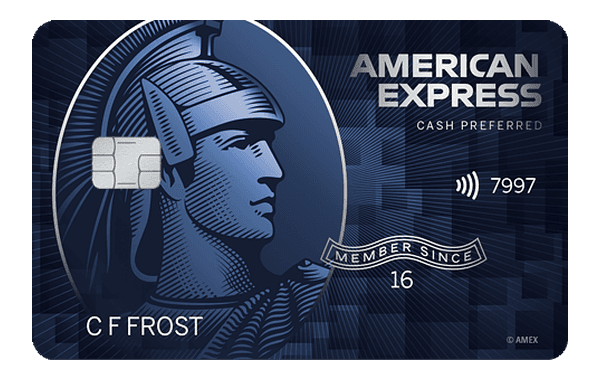
Blue Cash Preferred
American Express
- Our rating
- 8.3/10
- Welcome bonus
- $300 cash
- Bonus value
- ≈$300
- Annual fee
- $95
- Credits, max/yr
- $120
- Foreign txn fee
- 2.7%
Top earning rates
- 6x US supermarkets (up to $6k/yr)
- 6x Select US streaming
- 3x Transit and US gas stations
- 1x All other purchases
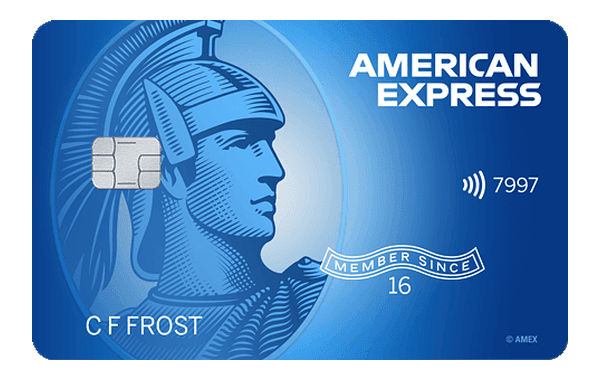
Blue Cash Everyday Card
American Express
- Our rating
- 7.8/10
- Welcome bonus
- $200 cash
- Bonus value
- ≈$200
- Annual fee
- $0
- Credits, max/yr
- $84
- Foreign txn fee
- 2.7%
Top earning rates
- 3x US supermarkets (up to $6k/yr)
- 3x US gas stations (up to $6k/yr)
- 3x US online retail purchases (up to $6k/yr)
- 1x All other purchases
Where Each Wins
Grocery rate
BCPThe Preferred's 6% at US supermarkets (up to $6,000 a year) is the category ceiling anywhere. The Everyday pays 3% on the same cap. Both drop to 1% past $6,000.
Annual fee
BCEThe Everyday is free. The Preferred costs $95, with a $0 intro fee the first year that makes trying it riskless.
Break-even math
BCPThe rate gap is 3% on up to $6,000, a maximum of $180 a year. Grocery spending above roughly $3,200 a year ($62 a week) makes the Preferred's fee profitable; a maxed cap nets $85 ahead.
Other categories
TieThe Preferred adds 6% on select US streaming and 3% on transit and US gas. The Everyday counters with 3% on US gas and, uniquely, 3% on US online retail, which covers Amazon and most e-commerce, plus a Disney Bundle credit.
Welcome offers
BCPThe Preferred's $250 for $3,000 spend edges the Everyday's $200 for $2,000, and its first-year fee waiver means you evaluate the 6% rate for free.
The Compound Verdict
Add up your grocery receipts. Above about $65 a week at US supermarkets, take the Preferred: the 6% rate plus streaming 6% buries the $95 fee, and the first-year waiver lets you verify before paying anything. Below that, take the Everyday and enjoy the sleeper 3% online retail category the Preferred does not have. One warning applies to both: Walmart and Target are coded as superstores, not supermarkets, and earn 1%; if that is where your groceries happen, neither card is your answer.
Our ratings give it to the Blue Cash Preferred (8.3 vs 7.8). On current welcome offers, the BCP brings the bigger first-year haul at ≈$300. The fee gap is $95 a year, so make sure the extra credits and multipliers actually fit your spend.
Read the full reviews for the complete math: BCP review and BCE review, or put them side by side in the comparison tool.
Common Questions
How much grocery spending justifies the Blue Cash Preferred's fee?
About $3,200 a year, roughly $62 a week, at US supermarkets. At that point the 6%-vs-3% gap covers $95. Max the $6,000 cap and the Preferred nets $85 more per year than the Everyday, before its streaming and transit rates add anything.
Do Walmart and Target count as supermarkets on these cards?
No. Amex codes them as superstores, earning 1% on both cards, and warehouse clubs like Costco are likewise excluded. The 6% and 3% rates apply to traditional US supermarkets, Kroger, Safeway, Publix, Wegmans, and the like.
Can I downgrade the Preferred to the Everyday later?
Yes, Amex allows product changes between the Blue Cash cards without a new application. A common path: take the Preferred's first-year fee waiver, measure a real year of grocery earning, and downgrade to the Everyday if the 6% did not pay for itself.