
Chase Ink Business Cash vs Chase Ink Business Unlimited
By Alex Compton · Updated
The Ink Business Cash and Ink Business Unlimited are twin no-fee Chase business cards: both currently offer $1,000 cash back after $8,000 in four months. The lasting difference is the earning structure, 5% categories versus flat 1.5%, which makes the better keeper depend on your expense profile.
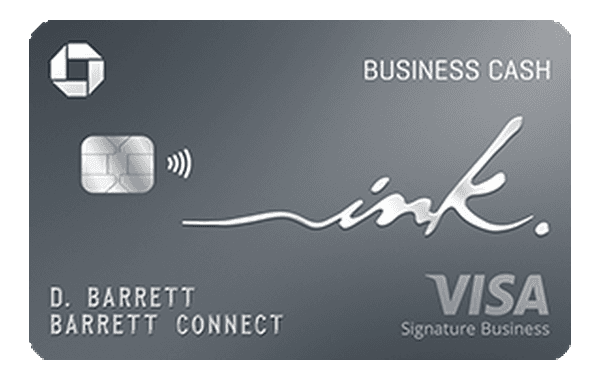
Chase Ink Business Cash
Chase
- Our rating
- 8.5/10
- Welcome bonus
- 100,000 points
- Bonus value
- ≈$1,000
- Annual fee
- $0
- Credits, max/yr
- $0
- Foreign txn fee
- 3%
Top earning rates
- 5x Office supply stores, internet/cable/phone ($25k/yr cap)
- 2x Gas stations and restaurants ($25k/yr cap)
- 1x All other purchases
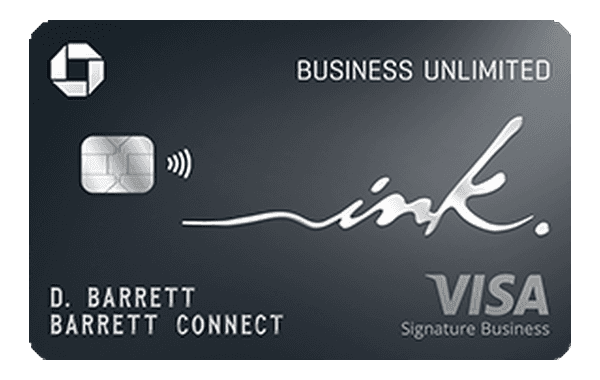
Chase Ink Business Unlimited
Chase
- Our rating
- 8.7/10
- Welcome bonus
- 100,000 points
- Bonus value
- ≈$1,000
- Annual fee
- $0
- Credits, max/yr
- $0
- Foreign txn fee
- 3%
Top earning rates
- 1.5x All purchases
Where Each Wins
Earning structure
TieThe Cash earns 5x at office supply stores and on internet, cable, and phone (capped at $25k a year) plus 2x on gas and restaurants. The Unlimited earns a flat 1.5x on everything. Which wins is purely where your money goes.
The office-supply trick
CICOffice supply stores sell gift cards for hundreds of other merchants, letting savvy operators route grocery, gas, and retail spend through the 5x category. It is the Cash's quiet superpower.
Simplicity
CIUThe Unlimited requires zero thought: every business purchase earns the same 1.5x. The Cash rewards attention to category routing and punishes spend outside its lanes at 1x.
Bonuses
TieBoth currently pay $1,000 after $8,000 in four months. Chase says the bonus may not be available if you have ever had that card or another no-annual-fee Chase business card, so prior-card eligibility matters as much as the headline.
Telecom spend
CICInternet, cable, and phone at 5x is a category every business has: a $300 monthly telecom bill earns 18,000 points a year on the Cash versus 5,400 on the Unlimited.
The Compound Verdict
Choose the first card by expense profile: telecom and office-supply spending favor Cash, while broad unbonused expenses favor Unlimited. The matching $1,000 offers are unusually strong for cards with no annual fee, but do not assume you can collect both bonuses: Chase's current terms reserve the right to deny a bonus based on prior ownership of either card or another no-fee Chase business card.
Our ratings give it to the Chase Ink Business Unlimited (8.7 vs 8.5). On current welcome offers, the CIC brings the bigger first-year haul at ≈$1,000.
Read the full reviews for the complete math: CIC review and CIU review, or put them side by side in the comparison tool.
Common Questions
Can I get both Ink Cash and Ink Unlimited bonuses?
Do not count on both. Chase's current public terms say each bonus may be unavailable if you have ever had that card or any other Chase for Business card without an annual fee. Chase also says it may consider other factors pertinent to the business.
How do these free cards earn transfer-partner points?
Their Ultimate Rewards pool with any premium Chase card, an Ink Preferred, Sapphire Preferred, or Reserve, and become fully transferable to Hyatt, United, Southwest, and the rest. Without a premium card in the household, both earn straight cash back at 1 cent per point.
What counts for the Ink Cash's 5x categories?
Office supply stores (Staples, Office Depot) and internet, cable, and phone services, up to $25,000 combined per year, plus 2x on gas and restaurants up to another $25,000. The gift card racks at office supply stores are famously the category's power move.